
Last updated September 25, 2026
Non-destructive entry first, always - and we re-key Schlage, Kwikset, and Baldwin locks on the spot while you watch
You get a price before we start. It does not change when we arrive. No surprises.
Locksmith Permits, Codes & Inspections in IL: What You Need to Know
Unlike Illinois electricians, who cannot legally touch a panel without a license, a person in Illinois can legally advertise as a locksmith, respond to your call, and charge you whatever they can negotiate - there is no state trade license required as of 2025. This surprises most Chicago homeowners, who assume the person rekeying their new home passed the same background checks and testing as their plumber. In this guide and our Locksmith Warning Signs: A Chicago Homeowner’s Reference Guide, we’ll walk through what is actually regulated, what isn’t, and how to verify that the technician at your door has real credentials rather than a magnetic sign and a rented van.
Quick Answer
Illinois does not require individual locksmiths to hold a state trade license. The Private Detective, Private Alarm, Private Security, Fingerprint Vendor, and Locksmith Act (225 ILCS 447) mandates registration for locksmith business entities, not technicians. Chicago requires locksmith companies operating within city limits to hold a municipal business license. Permits for locksmith work itself are only required when the job involves new construction, fire-rated door hardware, or ADA compliance modifications. Insurance and bonding protect you from damage; voluntary certifications like ALOA membership indicate training but carry no legal weight in Illinois.
Table of Contents

- What Illinois State Law Actually Requires
- Chicago Municipal Licensing Requirements
- When a Locksmith Job Requires a Permit
- Insurance, Bonding, and What You Can Claim
- Certifications vs. Licensing: What “Certified” Actually Means
- How to Verify a Locksmith’s Credentials in Chicago
- Red Flags for Locksmith Fraud in Illinois
- Common Mistakes to Avoid
- When to Call a Professional
- Frequently Asked Questions
What Illinois State Law Actually Requires
The Private Detective, Private Alarm, Private Security, Fingerprint Vendor, and Locksmith Act, codified at 225 ILCS 447, governs locksmithing in Illinois. Most Chicago residents assume this law creates a licensed trade with tested competence. It does not.
Here is what the Act actually mandates:
- Business entity registration: Any company advertising or performing locksmith services must register with the Illinois Department of Financial and Professional Regulation (IDFPR). The business pays a fee, provides proof of insurance, and submits to a background check. The registration certificate must be displayed at the place of business.
- No individual technician license: The Act does not require individual locksmiths to pass an exam, complete an apprenticeship, or hold a personal license. A registered company can hire technicians with no formal training and send them to your home legally.
- No continuing education: Unlike electricians or plumbers, registered locksmith businesses face no ongoing education requirement to maintain registration.
- Reciprocal registration: Out-of-state locksmith companies can register to operate in Illinois, which explains the flood of out-of-area call centers advertising in Chicago suburbs.
The registration fee for a locksmith business runs $350 for two years as of 2025. The background check covers felony convictions, but the standard is not disqualifying for all criminal history. A company with a registered status has cleared this bar. A technician working for that company may have cleared nothing at all.
We’ve responded to calls in Lincoln Park and Oak Park where the previous technician drilled a lock that should have been picked, or installed a deadbolt upside-down in a fire-rated door. The customer called the company; the company had already changed its advertised name. IDFPR registration follows the business entity, not the person who did the damage.
The practical takeaway: state registration proves a company exists and has insurance on file. It does not prove the technician at your door knows how to service a Medeco high-security cylinder without destroying it.
Chicago Municipal Licensing Requirements
Chicago adds a layer that the state does not. Any locksmith company operating within city limits must hold a Chicago business license with a locksmith classification. This is separate from state registration and carries its own requirements.
The Chicago Department of Business Affairs and Consumer Protection (BACP) issues these licenses. To obtain one, a company must:
- Hold active IDFPR registration as a locksmith business
- Provide proof of general liability insurance naming the City of Chicago as additional insured
- Submit a completed business license application with the locksmith classification
- Pay the annual license fee, which varies by business size and structure
- Maintain a physical business address within Illinois (P.O. boxes are not permitted as the primary address)
The BACP license must be renewed annually. A company operating in Chicago without this license faces fines and shutdown orders, though enforcement is complaint-driven rather than proactive.
Here’s where Chicago’s system creates a gap that affects homeowners in neighborhoods like Wicker Park, Hyde Park, and Rogers Park. The BACP license attaches to the business, not to individual technicians. A company can hold a valid license while sending untrained subcontractors to jobs. The city does not inspect technician competence or require company-specific training programs.
We’ve found that Chicago’s municipal licensing does serve one critical function: it creates a local address of record. When a customer files a complaint with BACP, the city has a physical location to investigate. Fly-by-night operations that advertise Chicago service areas but maintain no Illinois office often skip this license entirely. Checking BACP’s online license lookup is a fast way to spot them.
For homeowners in Chicago proper, our Seasonal Locksmith Care for Chicago: Year-Round Homeowner’s Guide recommends verifying both IDFPR registration and BACP licensing. Suburban customers in Evanston, Skokie, or Downers Grove should check whether their municipality maintains a separate locksmith business license. Most do not, but Oak Park and a handful of others require general business registration for service trades.
When a Locksmith Job Requires a Permit
Most residential lock changes, rekeys, and even new lock installations do not require a building permit in Illinois. This surprises some homeowners and relieves others. But several categories of locksmith-adjacent work do trigger permit and inspection requirements, and performing this work without permits can void insurance, violate condo association rules, or create liability if someone is injured.
New Construction and Major Renovation
Any lock hardware installed in new construction or gut renovation must comply with the currently adopted building code and pass inspection. In Chicago, this means the Chicago Building Code, which references ICC standards for door hardware. The general contractor or homeowner pulls the permit; the locksmith’s role is supplying and installing code-compliant hardware that the inspector can verify.
Common triggers include:
- Entry door sets in new construction
- Hardware for accessible dwelling units under ICC A117.1
- Fire-rated door assemblies in multi-family buildings
- Stairwell re-entry hardware in commercial and high-rise residential buildings
Fire-Rated Door Hardware Replacement
Chicago’s building code and the Illinois Fire Code require that any hardware replacement on a fire-rated door maintain the door’s listed rating. This is not a suggestion. Installing a non-listed deadbolt, removing the closer, or substituting a non-rated latch can fail inspection and, in commercial buildings, trigger fire marshal enforcement-one reason we publish a Commercial Locksmith Maintenance Checklist for Chicago Homeowners.
In our work across Chicago’s vintage courtyard buildings and 1960s high-rises, we regularly encounter fire-rated doors with hardware that was changed by a previous owner using big-box store components. The hardware functions. It is also illegal. When we document these findings, we provide the customer with a written scope noting the code violation and a separate quote for compliant replacement. Haven Standard Clause 4 requires us to report what we found, not to perform work that conceals it.
ADA Compliance Modifications
The Americans with Disabilities Act and Illinois Accessibility Code govern door hardware in public accommodations and multi-family housing. Lever handles at specified heights, maximum operating forces, and clearances for approach are all measurable requirements. A locksmith modifying hardware in a Chicago apartment building lobby, a retail space, or a commercial office must understand these specifications or risk creating an ADA violation that exposes the property owner to lawsuit.
Permits for ADA modifications are typically pulled by the property owner or their architect. The locksmith’s responsibility is installing hardware that meets the specification and documenting the installation with photos and product cut sheets. Our documented photo record, included standard on every visit, serves this purpose.
Access Control and Electronic Systems
Hardwired access control systems in commercial buildings often require electrical permits and inspection. In Chicago, low-voltage work under 50 volts may not require a separate electrical permit, but any connection to building power, fire alarm integration, or maglock installation on a fire-rated door triggers both electrical and fire alarm inspection. Access control systems in Chicago must be planned with these requirements built in, not discovered after installation.
For homeowners, the rule of thumb: if you’re changing a lock on an existing door in a single-family home, no permit. If you’re touching a fire-rated door, installing new construction hardware, or modifying a commercial entrance for accessibility, verify permit requirements with your building department before work begins.
Insurance, Bonding, and What You Can Claim

Illinois requires registered locksmith businesses to carry general liability insurance. Chicago’s BACP license requires additional insured status for the city. But the details of coverage matter more than the fact of it, and most customers never ask.
General Liability Insurance
A standard locksmith general liability policy covers property damage and bodily injury caused by the company’s work. Typical coverage limits run $1 million per occurrence and $2 million aggregate, though smaller operations may carry less. The policy covers:
- Damage to doors, frames, or finishes during lock installation or repair
- Injury to third parties from faulty hardware installation (a door closer failing and striking someone, for example)
- Errors in access control system installation that cause security breaches or property loss
What it typically does not cover: damage to the lock itself if the hardware was defective, or consequential losses from a break-in that occurred after the work was performed. We’ve seen customers in Chicago’s Gold Coast and Streeterville assume a locksmith’s insurance covers their stolen property because the lock was recently serviced. It does not.
Surety Bonds
Some Illinois locksmith businesses carry surety bonds, though the state does not mandate them. A bond is a three-party agreement: the bonding company guarantees that the locksmith will perform according to contract. If the locksmith fails, the customer can file a claim against the bond for financial recovery.
Bond claims are not automatic. The customer must prove:
- A valid contract existed defining the scope of work
- The locksmith failed to perform or performed defectively
- The customer suffered measurable financial loss as a direct result
- The loss falls within the bond’s coverage limits and exclusions
We’ve encountered customers who believed a “$10,000 bonded” claim meant they were protected for any dispute up to that amount. In practice, bond claims require documentation most consumers don’t gather. The stronger protection is a written scope of work with firm pricing, which is why Haven Standard Clause 1 exists: the price on the phone is the price on the invoice, documented before any work starts.
What to Request
Before hiring any locksmith in Chicago, request:
- Certificate of insurance showing general liability coverage with current dates
- IDFPR registration number (verifiable online)
- BACP license number if operating within Chicago city limits
- Written scope and firm price for the specific work, not an estimate range
At Novak Lock & Security Chicago, we provide this documentation on request without hesitation. A company that deflects or delays is telling you something.
Certifications vs. Licensing: What “Certified” Actually Means
The locksmith trade is thick with acronyms and credential claims. Understanding which carry legal weight and which indicate voluntary training separates informed customers from easy marks.
ALOA Security Professionals Association
ALOA, formerly the Associated Locksmiths of America, offers the most recognized voluntary credentialing in the trade. Their designations include:
- Certified Registered Locksmith (CRL): Entry-level certification requiring passage of a written exam covering basic lock mechanisms, key identification, and installation standards.
- Certified Professional Locksmith (CPL): Intermediate certification requiring additional exams in advanced locking systems, safe work, and access control fundamentals.
- Certified Master Locksmith (CML): The highest ALOA credential, requiring comprehensive examination across all major categories including automotive, safes, and electronic systems.
These certifications demonstrate that a technician has invested in training and passed standardized testing. They are not licenses. An ALOA-certified technician working for an unregistered company is performing locksmith services illegally in Illinois. An uncertified technician working for a registered company is performing them legally.
We’ve employed ALOA-certified technicians and trained others to that standard internally. The certification correlates with competence but does not guarantee it. We’ve also encountered CRL holders who could not properly pin a Schlage deadbolt to master key system specifications. The credential is a filter, not a guarantee.
Manufacturer Certifications
Medeco, Mul-T-Lock, Abloy, and other high-security manufacturers offer factory training and authorization programs. These are not trade licenses. They indicate that a technician has completed the manufacturer’s specific training on that product line and is authorized to sell, install, and warranty that brand’s hardware.
For Chicago homeowners installing high-security cylinders, factory authorization matters practically. Medeco and Mul-T-Lock key systems require specialized key cutting equipment and key control procedures. A non-authorized technician cannot obtain blank keys or perform warranty service. We maintain factory authorization on residential locksmith in Chicago work for this reason.
State-Required Fingerprinting
Under 225 ILCS 447, registered locksmith businesses must fingerprint owners and officers. Technicians are not fingerprinted unless they are also owners or designated managers. This is a common point of confusion. A company can advertise “state-licensed and fingerprinted” while the technician at your door has undergone no background check at all.
The distinction matters in a trade where technicians enter homes, handle keys, and learn security vulnerabilities. Our policy at Novak Lock & Security goes beyond the minimum: every technician is background-checked before hiring and uniformed on every visit, with a documented photo record left with the customer. This is Haven Standard procedure, not Illinois law.
What to Ask
When a locksmith advertises “certified,” ask:
- Certified by whom? ALOA, a manufacturer, or a training company with no industry recognition?
- Is the certification current, and can they provide documentation?
- Does the certification cover the specific work you need (automotive, safe, access control, residential)?
- Is the business itself registered with IDFPR, or only the individual technician?
Voluntary certifications add value. They do not replace the baseline checks of business registration, insurance verification, and written pricing.
How to Verify a Locksmith’s Credentials in Chicago
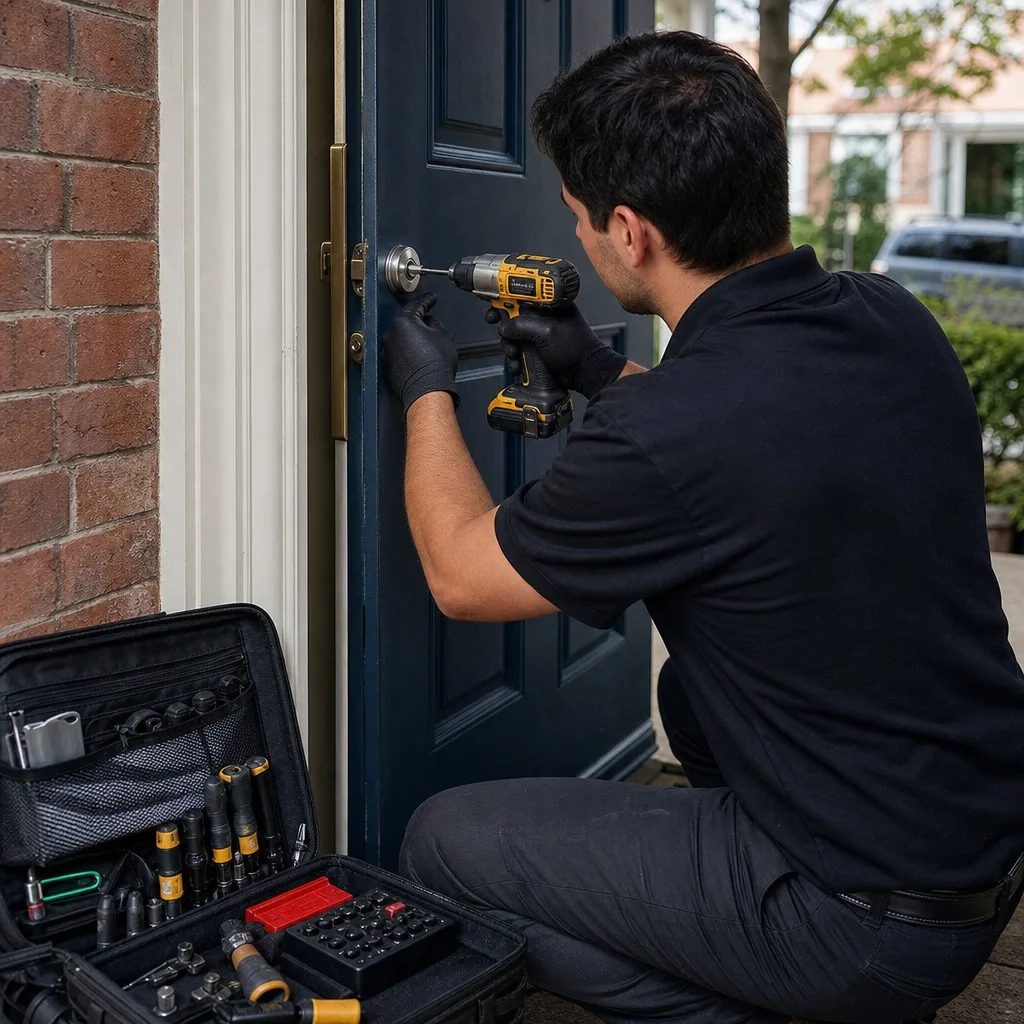
Verification takes ten minutes and prevents most locksmith fraud; see our more guides & resources for additional protection steps. Here’s the process we recommend to every caller, even those who don’t hire us.
Step 1: Check IDFPR Registration
Visit the Illinois Department of Financial and Professional Regulation license lookup portal. Search for the business name as advertised. Confirm:
- The registration status is “Active”
- The business address matches the service area advertised
- The registration category is “Locksmith” not a related but different category
Red flag: a business registered at a residential address in a distant suburb while advertising “downtown Chicago 15-minute response.” This often indicates a call center dispatching to unvetted subcontractors.
Step 2: Verify Chicago BACP License (If Applicable)
For work within Chicago city limits, use the BACP license lookup. Enter the business name or license number. An active license confirms the company has met Chicago’s insurance and address requirements.
We’ve found companies with valid IDFPR registration but expired BACP licenses still advertising Chicago service. They may perform the work, but they operate without municipal authorization. If a problem arises, BACP complaint channels are closed to you.
Step 3: Request Insurance Documentation
Ask for a certificate of insurance (COI) showing general liability coverage. The COI should:
- Name the locksmith business exactly as you’re contracting with them
- Show coverage dates that include your service date
- Indicate policy limits of at least $1 million per occurrence
We email COIs to property managers and condo boards regularly. Individual homeowners rarely request them. They should.
Step 4: Confirm Written Pricing
Haven Standard Clause 1 exists because this step eliminates the most common fraud vector. Request a firm price for your specific job in writing before anyone is dispatched. The price should include:
- Service call or trip charge, if any
- Labor for the described work
- Hardware costs with brand and model specified
- Any additional fees (after-hours, mileage, etc.)
The written price should match the invoice price. At Novak Lock & Security, the dispatcher quotes the firm price, and the technician is contractually prohibited from changing it at the door. This rule has been in place since 2002.
Step 5: Document the Technician’s Arrival
When the technician arrives, verify:
- Company-marked vehicle or clear identification
- Uniform with company name
- Written scope matching your phone quote
- Photo documentation of work performed
Our technicians provide a documented photo record as standard, not as an upgrade. The customer receives it at job completion. If a company cannot or will not document their work, question what they’re concealing.
Red Flags for Locksmith Fraud in Illinois
Chicago’s market attracts locksmith fraud at rates higher than most trades because the barriers to entry are so low. No license, no apprenticeship, minimal startup cost. Recognize these patterns before you open your door.
- The $19 service call: Advertised prices of $15-$29 for any locksmith service are universally bait pricing. The technician arrives, claims the lock is “high security” or “drill only,” and demands $200-$500. The original price was for the trip charge alone, if that. We’ve rekeyed locks in Lakeview for customers who paid $400 to a $19 advertiser for work that should have cost $120-$180.
- No local address: A company with no verifiable Illinois office, only a toll-free number and generic website, is likely a call center dispatching to the lowest bidder. Check IDFPR registration for a physical address. P.O. boxes and virtual offices are warning signs.
- Cash-only demands: Legitimate locksmith businesses accept standard payment methods. Demanding cash, especially with pressure or a discount offer for cash, often indicates tax evasion or an operation that disappears after payment.
- Refusal to provide written price: Any technician who will not put the price in writing before starting work is reserving the right to change it. This is the core mechanism of bait-and-switch.
- Unmarked vehicles and no identification: Professional operations invest in marked vehicles and uniformed technicians for accountability. An unmarked van and a technician in street clothes has no reputation to protect.
- Drilling as first resort: Most residential locks can be picked or bypassed by trained technicians. Drilling destroys the lock and generates hardware replacement revenue. A technician who reaches for the drill before attempting non-destructive entry is either unskilled or predatory.
We’ve responded to fraud aftermath in every Chicago neighborhood from Pullman to Edison Park. The pattern is consistent: the customer was in a hurry, searched “locksmith near me,” called the first result with a low price, and paid 3-5 times the fair rate for inferior work. Ten minutes of verification prevents this.
Common Mistakes to Avoid
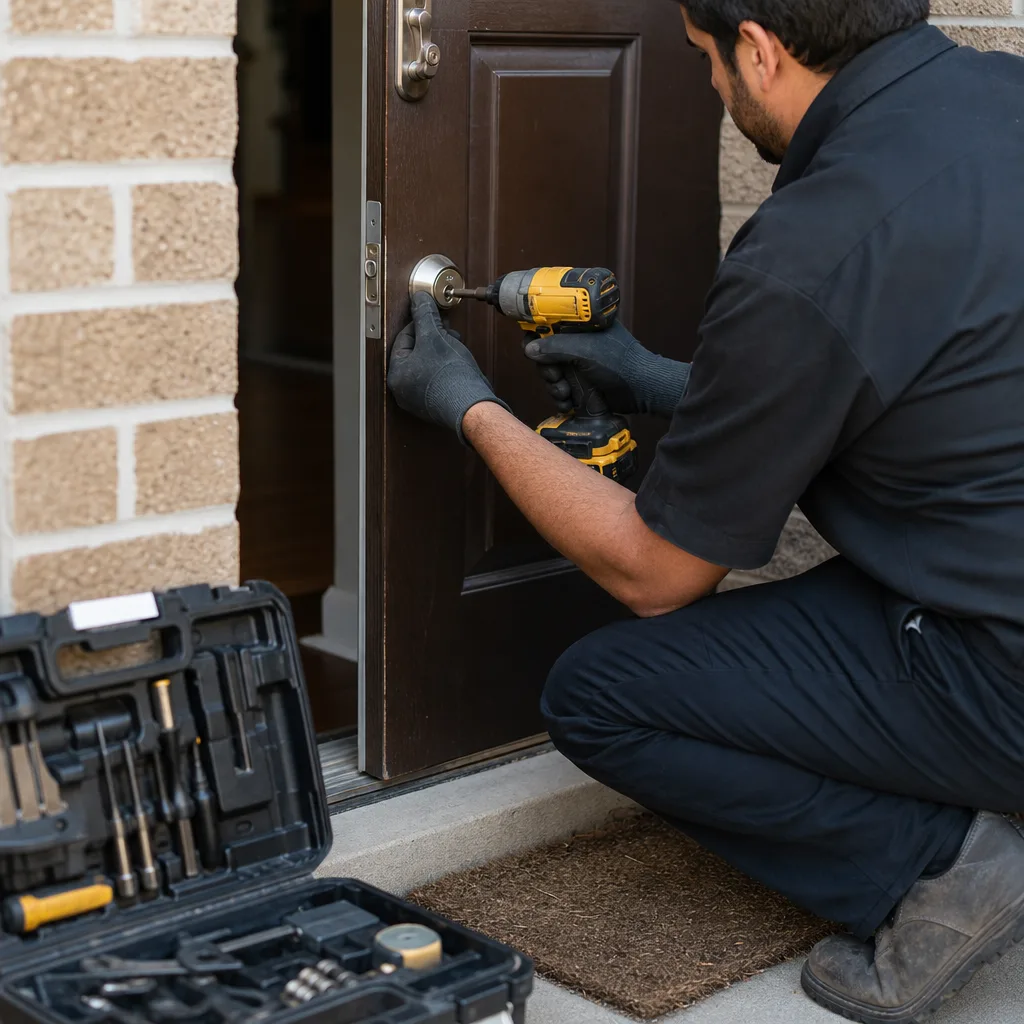
- Assuming “licensed” means “tested and competent.” In Illinois, it means “registered and insured.” Ask what the license required: an exam, apprenticeship, or fee payment? The answer reveals the actual standard.
- Hiring based on response time alone. A 15-minute response from an unvetted subcontractor is not safer than a 45-minute response from a documented, insured technician. In Chicago traffic, promises of instant arrival are often fiction anyway.
- Accepting verbal estimates for commercial work. Commercial locksmith in Chicago jobs, especially access control and master key systems, require surveyed scopes and flat per-lock pricing. A verbal estimate for a 50-door rekey is not a contract; it’s a starting point for dispute.
- Ignoring fire-rated door requirements in condos and apartments. Chicago’s older multi-family housing stock includes thousands of fire-rated doors with non-compliant hardware. Replacing a lock without checking the rating creates liability for the unit owner and potential rejection by building management.
- Not requesting documentation of work performed. Without a written scope, photo record, or warranty document, you have no recourse if the lock fails or the key doesn’t work properly. We provide all three on every job. Companies that don’t are betting you won’t need them.
- Confusing ALOA membership with state licensing. ALOA is a professional association with voluntary certifications. It is not a government agency. Membership indicates professional engagement; it does not grant legal authority to operate in Illinois.
- Waiting until an emergency to find a locksmith. The worst time to evaluate credentials is during a lockout at midnight. Research and save a verified company’s contact information before you need it.
When to Call a Professional
Call a professional locksmith when the job involves security-critical hardware, code compliance, or warranty protection. This includes: moving into a new home and rekeying all cylinders, installing high-security locks on entry doors, repairing or replacing fire-rated door hardware in multi-family buildings, integrating electronic access control with existing building systems, extracting broken keys from ignitions or high-security cylinders, and any situation where you’ve already attempted DIY repair and worsened the problem.
We’ve found that Chicago’s freeze-thaw cycles, particularly the harsh winters of 2013-2014 and 2018-2019, accelerate wear on exterior lock mechanisms. Customers in neighborhoods like Portage Park and Albany Park call us in March with deadbolts that seized after moisture intrusion and refreezing. Preventive maintenance in fall, including lubrication and strike alignment, avoids emergency calls in winter.
Novak Lock & Security Chicago offers free estimates in Chicago - call (331) 202-1318. Our dispatcher will quote a firm price for your specific job, and our technician will arrive with that price in writing. No exceptions, no surprises at the door.
Frequently Asked Questions
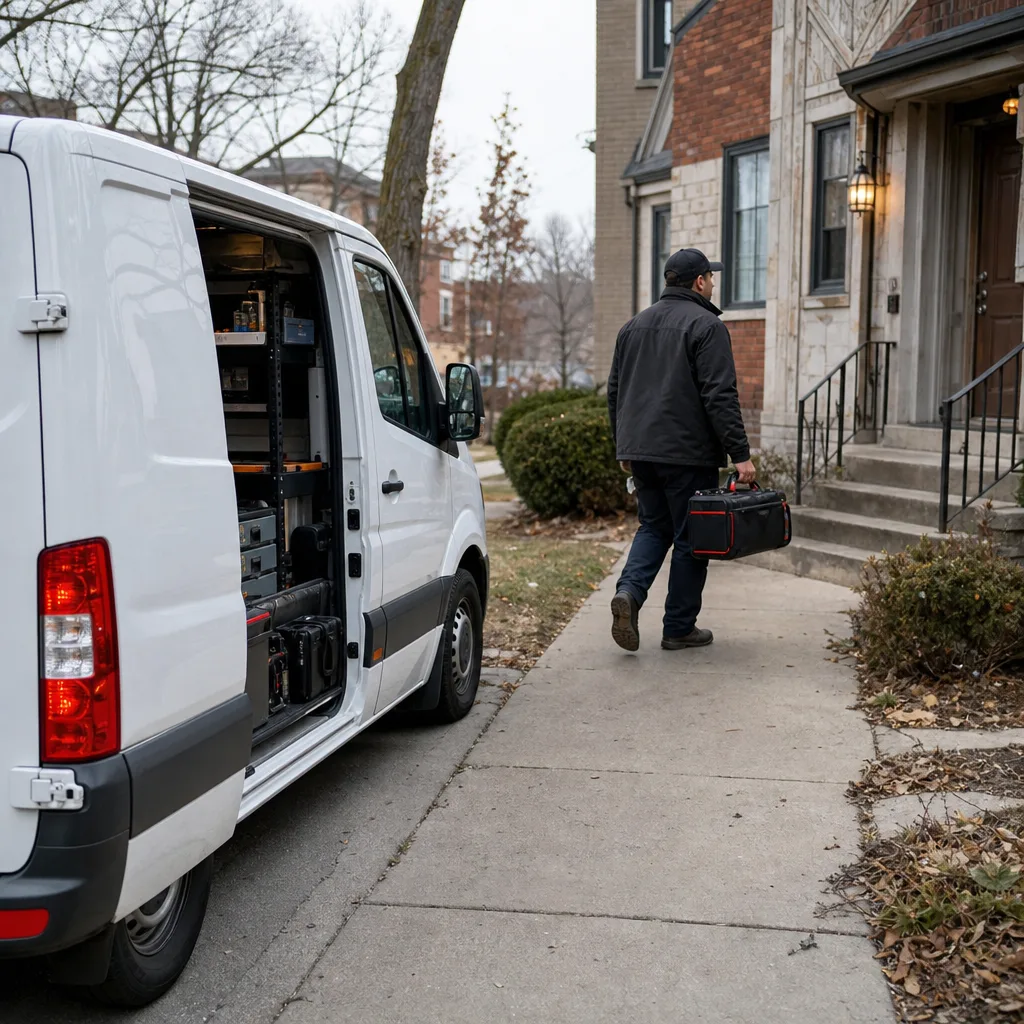
No. Illinois does not require individual locksmiths to hold a state trade license. Locksmith businesses must register with IDFPR and carry insurance, but technicians need no formal training, apprenticeship, or examination to perform locksmith work legally. Call (331) 202-1318 if you want to discuss what credentials our technicians actually hold.
Verify three things: active IDFPR registration through the state’s online portal, active Chicago BACP license if they operate within city limits, and general liability insurance with current coverage dates. Request a written, firm price before anyone is dispatched. A legitimate company provides all three without hesitation.
It usually means they hold a voluntary credential, most commonly from ALOA (Certified Registered Locksmith, Certified Professional Locksmith, or Certified Master Locksmith) or from a lock manufacturer like Medeco or Mul-T-Lock for factory-authorized installation. These indicate training and testing but are not government licenses and do not grant legal authority to operate in Illinois.
Not for standard residential replacement in existing single-family homes. Permits are required for new construction, fire-rated door hardware replacement, and ADA compliance modifications in commercial or multi-family buildings. If you live in a Chicago condo or co-op, your association may require notification or approval even when the city does not require a permit.
A surety bond guarantees contractual performance. If a bonded locksmith fails to complete work or causes financial loss through breach of contract, you can file a claim against the bond. Claims require documentation of the contract, the failure, and measurable damages. Bonds are not required by Illinois law and are less common than general liability insurance, which covers property damage and injury directly.
Yes, for your own single-family residence. You cannot legally perform locksmith services for others without the business being registered with IDFPR. For fire-rated doors, new construction, or commercial properties, owner-installed hardware must still meet code and pass inspection where permits are required. We’ve been called to reinstall customer-installed deadbolts that were mounted upside-down, misaligned with strikes, or incompatible with door preparation dimensions.
The combination of no individual licensing, low startup costs, and emergency-driven customer behavior creates ideal conditions for fraud. A person can rent a van, buy a magnetic sign, and advertise on Google within days. The customer, locked out at night, searches quickly and calls the lowest price. Verification takes time that emergencies don’t seem to allow. The solution is researching and saving a verified locksmith’s contact before you need it.
A proper written estimate specifies: the exact work to be performed (rekey 4 Schlage deadbolts, install 1 Abloy high-security cylinder on front door, etc.), hardware brand and model numbers, labor charges itemized by task, trip or service call charge if applicable, after-hours surcharges if relevant, and the total firm price. At Novak Lock & Security, the dispatcher quotes this price, and the technician arrives with it in writing. The price on the phone is the price on the invoice. Haven Standard Clause 1.
The Bottom Line
Illinois locksmith regulation creates a false sense of security. State registration checks business existence and insurance, not technician competence. Chicago’s municipal license adds local accountability but still does not test skill. Permits apply only to specific categories of work. Certifications indicate training but carry no legal weight. The homeowner’s protection lies in verification: checking registration, confirming insurance, demanding written pricing, and documenting the work. These steps filter out the call-center operations and bait-and-switch technicians that exploit Illinois’s low barriers. The trade rewards customers who treat credentials as something to verify, not something to assume.
Written by Daniel Novak, Owner at Novak Lock & Security Chicago, serving Chicago since 2002.