
Last updated September 25, 2026
Non-destructive entry first, always - and we re-key Schlage, Kwikset, and Baldwin locks on the spot while you watch
You get a price before we start. It does not change when we arrive. No surprises.
Locksmith Warning Signs: A Chicago Homeowner’s Reference Guide
The Illinois Attorney General’s office has documented the same locksmith fraud sequence in Chicago complaints for over a decade: low advertised price, vague phone response, arrival in an unmarked vehicle, “assessment” that finds a more complex problem, and a final price three to eight times the original quote. In 2023 alone, the Chicago Department of Business Affairs and Consumer Protection fielded hundreds of complaints against locksmith operations using this exact playbook, with average reported losses exceeding $400 per incident. This guide names each step and its visible warning sign, so you can stop the transaction before money changes hands.
Quick Answer
Chicago locksmith scams follow five predictable steps, each with a visible warning sign: (1) unrealistically low advertised prices under $19, (2) refusal to quote a firm price over the phone, (3) arrival in an unmarked vehicle, (4) immediate claim that drilling is required, and (5) a revised price at the door that abandons the original quote. A legitimate Chicago locksmith answers calls with a live person 24/7, provides a written price before dispatch, arrives in a marked company vehicle, and explains alternatives to drilling when they exist. For a deeper dive, see our The Complete Guide to Locksmith in Chicago.
Table of Contents

- The Five-Step Playbook: How Locksmith Fraud Works in Chicago
- The Unmarked Vehicle Tell: What Absence of Signage Means Operationally
- The “Drilling Required” Upsell: Genuine Necessity or Manufactured Crisis
- Reading Arrival Behavior: The First Three Minutes
- Price-Change Tactics at the Door: The Exact Language and Your Response
- What to Do If You’re Mid-Job and the Price Changes
- Common Mistakes to Avoid
- When to Call a Professional
- Frequently Asked Questions
- The Bottom Line
The Five-Step Playbook: How Locksmith Fraud Works in Chicago
Every fraudulent locksmith operation we have encountered in Chicago follows the same sequence. Understanding the steps lets you recognize where you are in the process and exit before you are financially committed.
Step 1: The Bait Price. The operation advertises a service call rate between $15 and $19, sometimes with a specific promise like “$15 unlock any car.” This figure is below the cost of fuel, insurance, and technician wages for a legitimate dispatch in Chicago. The purpose is not to honor it. The purpose is to get your call.
Step 2: The Vague Phone Response. When you call, the dispatcher deflects questions about total cost. Common phrases: “It depends on the lock,” “The technician will assess it,” or “Labor starts at $19 plus parts.” What you will not hear is a firm, written price for the specific work you need.
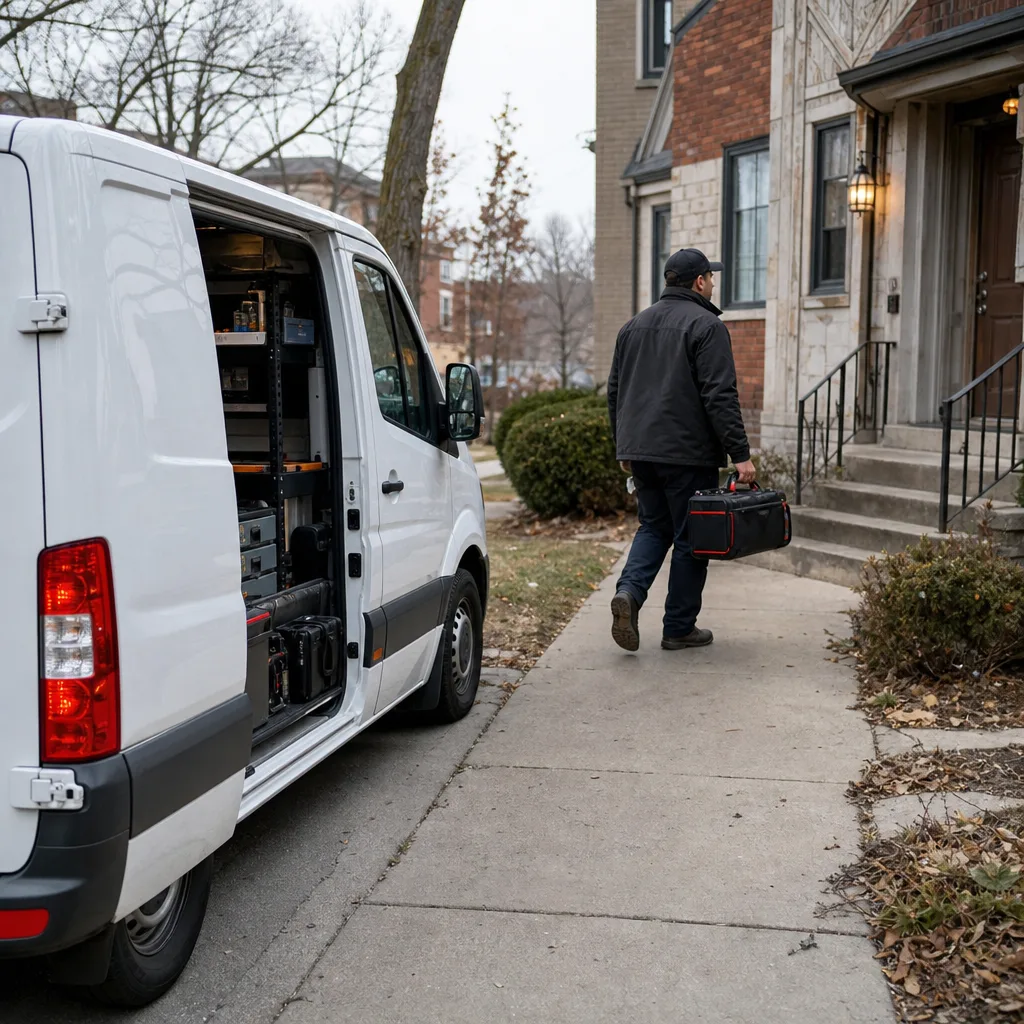
Step 3: The Unmarked Arrival. The technician arrives in a personal vehicle or rental van with no company name, no phone number, no license plate frame. In Chicago, legitimate locksmith operations are required to display their license information; the absence is not an oversight, it is operational design.
Step 4: The Manufactured Complexity. The technician examines the lock for under a minute and declares it unpickable, requiring drilling or replacement. The $19 service call is reframed as irrelevant to the “real” problem. A new price emerges, typically $250 to $600.
Step 5: The Pressure Close. You are locked out, it is cold, it is late, and the technician is already at your door. The operation counts on your desire to resolve the situation quickly. The invoice is presented as non-negotiable, sometimes with implied threats about removing already-installed hardware.
At Novak Lock & Security Chicago, we have rebuilt locks that were drilled unnecessarily in Lincoln Park, replaced Kwikset deadbolts that were functional before the “technician” destroyed them in Wicker Park, and rekeyed Medeco cylinders that a competitor claimed were unpickable in Oak Park. In every case, the customer recognized the playbook too late. This guide exists so you recognize it in time.
The Unmarked Vehicle Tell: What Absence of Signage Means Operationally
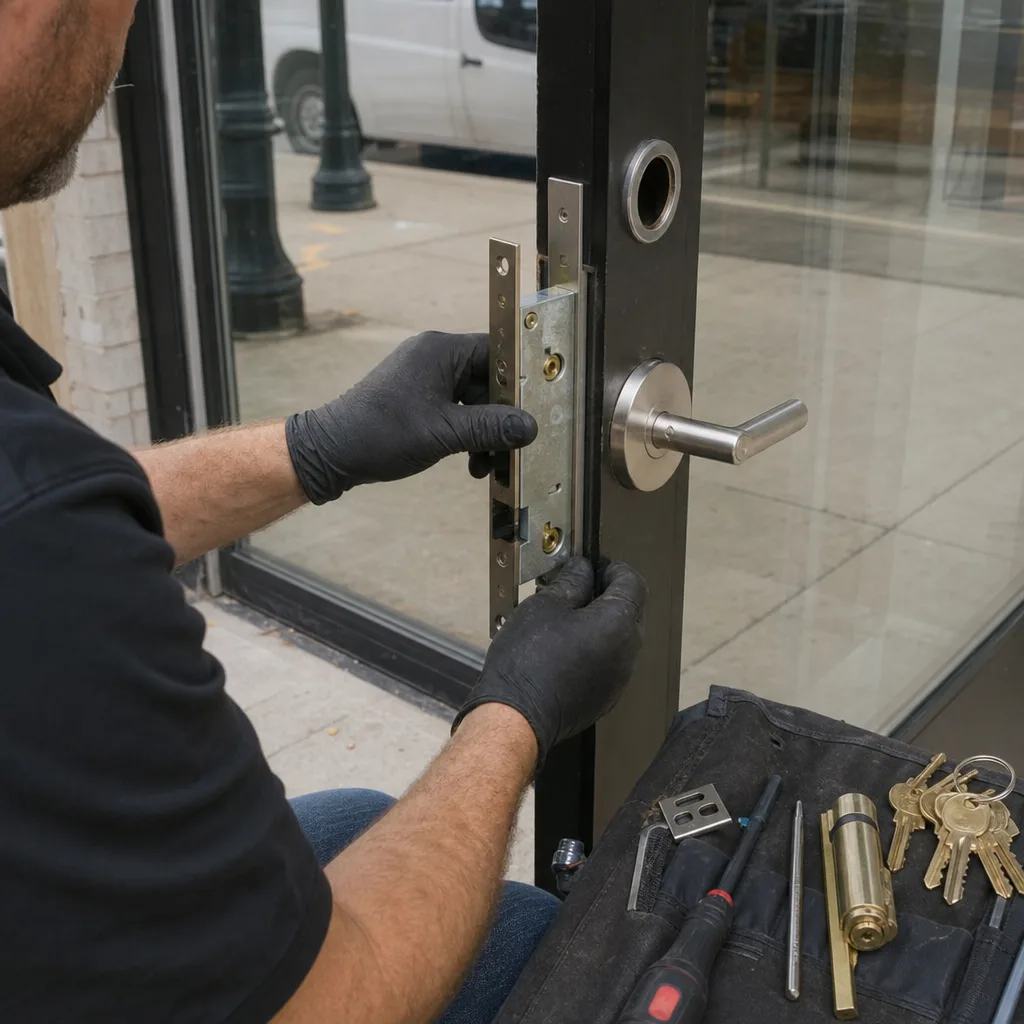
A legitimate locksmith operation in Chicago has substantial fixed costs: commercial vehicle insurance, city business licensing, registered trade names, and technician payroll. These costs are recovered over thousands of calls, and the vehicle is the rolling advertisement that makes that math work. An unmarked vehicle signals the opposite business model.
Here is what we mean. A Chicago locksmith serving residential customers across the North Side, West Side, and South Side neighborhoods needs dispatch efficiency. The van carries inventory, displays the company name and phone number for verification, and allows the office to track technician location. The signage is not decorative. It is how legitimate customers confirm they are opening the door to the right person.
Fraudulent operations use unmarked vehicles for three operational reasons:
- Identity switching. The same vehicle works for multiple scam brands, depending on which phone number the customer called.
- License avoidance. Chicago requires locksmith vehicles to display registration information. No signage, no inspection, no compliance.
- Geographic mobility. When complaints accumulate, the operation relocates to a new city with the same vehicle and new phone numbers.
When a technician arrives at your Chicago home, verify the vehicle before opening the door. The name on the van should match the name you called. The phone number should match the one you dialed. If the technician claims the marked van is “in the shop” or “being wrapped,” this is a known evasion tactic. Decline service and call a verified alternative.
At Novak Lock & Security Chicago, every technician arrives in a marked van with the company name, phone number (331) 202-1318, and license information visible. We leave a documented photo record with you at job completion, including the vehicle and technician identification. This is Haven Standard procedure, not an upgrade.
The “Drilling Required” Upsell: Genuine Necessity or Manufactured Crisis
Drilling a lock cylinder destroys it. The question is whether destruction was necessary. Understanding when drilling is genuinely required, and when it is a revenue tactic, protects you from the most common mid-job price escalation in Chicago locksmith fraud. Our Seasonal Locksmith Care for Chicago: Year-Round Homeowner’s Guide covers how weather conditions affect lock integrity and when drilling truly becomes necessary.
Genuinely necessary drilling: High-security cylinders with drill-resistant pins, such as Medeco or Mul-T-Lock, cannot be picked with standard tools when the key is lost and no code card exists. Some Baldwin and Yale high-security deadbolts, when the internal mechanism has failed due to corrosion or physical damage, require destructive entry. In Chicago’s lake-effect humidity cycles, we see internal corrosion in coastal neighborhoods like Streeterville and Edgewater that can seize a cylinder beyond non-destructive entry.
Manufactured necessity: Standard Kwikset or Schlage residential deadbolts, when you have simply lost your key or locked yourself out, are pickable by any trained locksmith with basic tools. The claim that “this lock is unpickable” is false for the vast majority of Chicago residential hardware installed after 1990. The claim that “the lock is too old” is suspect when applied to hardware less than 30 years old. The claim that “I have to drill for your safety” is nonsensical, drilling destroys your security, it does not enhance it.
Here is what a legitimate technician does before drilling:
- Attempts standard picking techniques with visible tools, explaining what they are doing.
- Explains why picking failed, if it fails, with specific reference to the lock’s internal mechanism.
- Offers alternatives: rekeying after destructive entry versus full replacement, with price for each.
- Obtains written authorization before destroying your hardware.
At Novak Lock & Security Chicago, our technicians carry a full pick set and are trained on non-destructive entry for all standard residential cylinders. Business owners should also review our Commercial Locksmith Maintenance Checklist for Chicago Homeowners to prevent emergency situations. We drill only when the lock mechanism is genuinely non-functional or high-security features prevent picking, and we quote the drilling price in writing before we start. Haven Standard Clause 1: the price on the phone is the price on the invoice. No exception for “discovered complexity.”
Reading Arrival Behavior: The First Three Minutes

The technician’s actions in the first 180 seconds reveal whether they are assessing your situation or manufacturing a crisis. Here is what we train our technicians to do, and what scam operators do instead.
Minute one: Identification and verification. A legitimate technician introduces themselves by name, confirms your name and address, and presents company identification. They do not touch your lock before this exchange is complete. A fraudulent operator often moves immediately to the lock, creating urgency and preventing conversation.
Minute two: Diagnostic questioning. Our technicians ask: When did the problem start? Is this the original key? Has anyone else worked on this lock? Has the lock been sticking? These questions identify the actual failure mode. Scam operators skip diagnosis. They already know their script: “This is a high-security lock,” “The previous installer used the wrong hardware,” “I need to drill this.”
Minute three: Transparent assessment. A legitimate technician examines the lock with you present, explains what they see, and states the solution and price before beginning work. In our experience across Chicago neighborhoods from Hyde Park to Rogers Park, most residential lockouts are resolved with picking or bypass techniques that take 5 to 15 minutes. The technician who declares a complex problem within 60 seconds of arrival has not assessed anything.
Specific warning signs in arrival behavior:
- Refusal to show identification or company credentials
- Immediate claim that the lock is “special” or “high-security” without explaining the specific feature
- Pressure to begin work before price is agreed in writing
- Request to see your ID or proof of residency before quoting a price (this is a distraction tactic, not a security measure)
- Use of generic tools from a hardware store bag rather than professional locksmith equipment
Daniel Novak established the three-minute protocol in 2002 because customers in Chicago told us they could not distinguish technicians from predators. The protocol exists so you can.
Price-Change Tactics at the Door: The Exact Language and Your Response
This is where most Chicago homeowners lose money. The original quote, vague as it was, is explicitly abandoned and replaced with a new figure. Understanding the exact language used, and having your response prepared, prevents the escalation.
Tactic 1: The “Service Call” Reframe.
What they say: “The $19 was just the service call. The labor and parts are extra.”
Your response: “What is the total price to complete this specific job, in writing, before you begin?” If they cannot state it, decline service. A legitimate operation quotes the full price for the described work.
Tactic 2: The “Discovered Complexity.”
What they say: “This isn’t a standard lock. It’s a high-security cylinder. That’s a different price.”
Your response: “Show me the high-security feature. Name the manufacturer and model.” Standard Kwikset and Schlage deadbolts are not high-security. Medeco, Mul-T-Lock, and Abloy are. If they cannot identify the specific security feature, they are inflating the job.
Tactic 3: The “After-Hours Surcharge.”
What they say: “The quote was for business hours. It’s after 6 p.m., so there’s a night rate.”
Your response: “I called at this time. You dispatched at this time. The price for this work at this time is what I need in writing.” At Novak Lock & Security Chicago, our 24/7 live answering means the price quoted when you call is the price at your door. No time-based surprises.
Tactic 4: The “Parts Required” Addition.
What they say: “The cylinder is damaged. I need to replace it. That’s $280 for the part plus labor.”
Your response: “Show me the damage. Show me the part you will install. Give me the total installed price in writing.” Then verify: if they drilled the lock, they caused the damage. If they are installing a new cylinder, what brand and grade?
The correct verbal response in every case is the same: a request for a specific, written, total price for the described work before any labor begins. If the technician refuses, the transaction ends. This is not rude. This is how you enforce Haven Standard Clause 1 in your own home.
At Residential Locksmith in Chicago, we quote firm prices because our technicians are not permitted to change them. The rule has been in place since 2002.
What to Do If You’re Mid-Job and the Price Changes
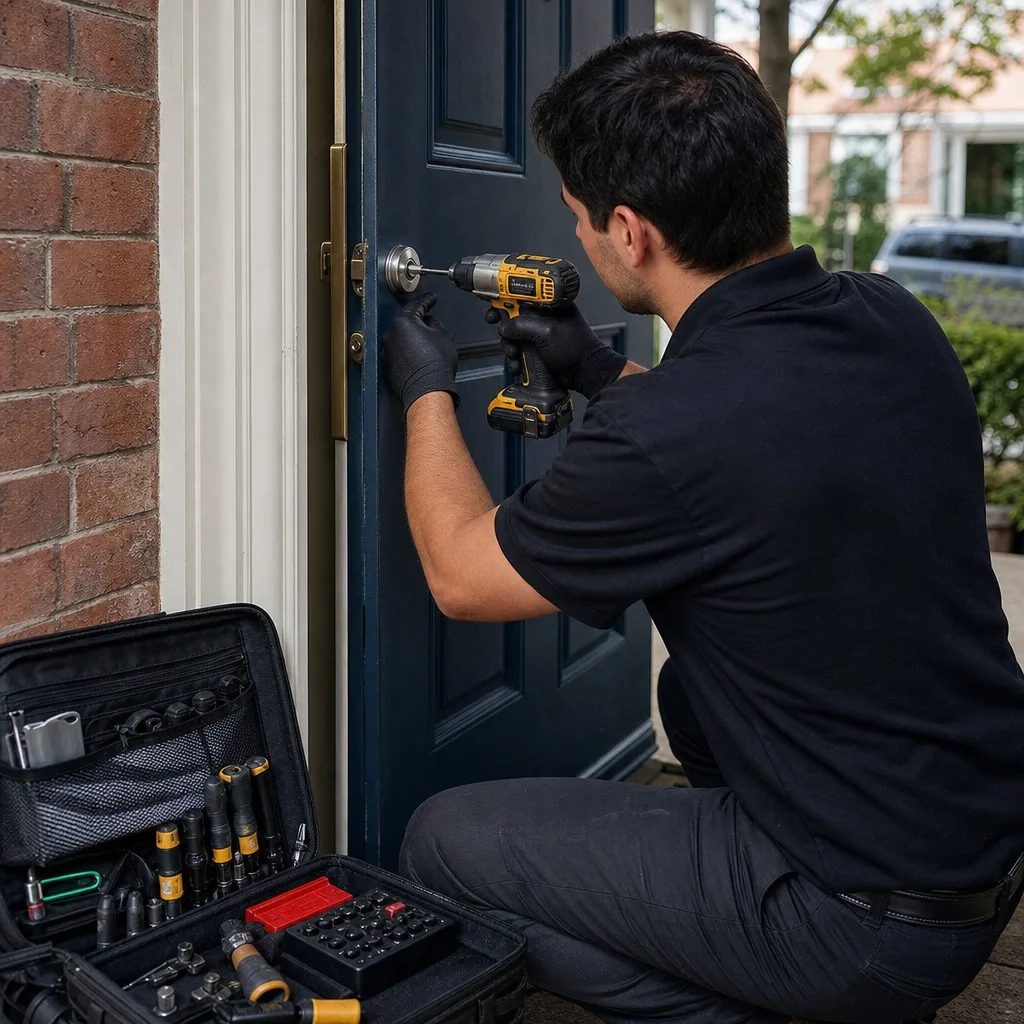
Sometimes the escalation happens after work has begun. The lock is disassembled, the door is open, and the technician presents a new figure. Here is your path forward in Chicago.
Step 1: Stop the work. State clearly: “Stop work. I do not authorize additional labor at this price.” In Illinois, unauthorized work beyond the agreed scope is not enforceable as a debt, though the operator may threaten otherwise.
Step 2: Document everything. Photograph the technician, the vehicle, any identification they provided, and the state of your lock. Photograph any invoice or estimate they present. Note the time, address, and exact language used. This documentation is essential for complaint filing.
Step 3: Do not pay under duress. If the technician refuses to leave or implies they will remove hardware, state that you are calling the Chicago Police Department. In Chicago, locksmith fraud that involves threats or refusal to leave a residence is a criminal matter, not merely a consumer complaint. Call 911 if you feel unsafe.
Step 4: File complaints. Report to the Illinois Attorney General’s Consumer Protection Division, the Chicago Department of Business Affairs and Consumer Protection, and the Better Business Bureau. Include your documentation. These complaints build the pattern that leads to enforcement action.
Step 5: Secure your property. If the technician has damaged your lock and departed, you need immediate re-securing. Call a verified locksmith with documented credentials. At Novak Lock & Security Chicago, we provide free second opinions on any written estimate, including post-incident assessments. Bring us a competitor’s quote, or in this case, a post-fraud invoice, and we will review it at no charge.
Your legal options in Illinois include small claims court for amounts under $10,000, and consumer fraud actions for deceptive practices. The Illinois Consumer Fraud and Deceptive Business Practices Act provides for actual damages, attorney fees, and in appropriate cases, punitive damages. Documentation you collected in Step 2 is the foundation of any legal action.
Common Mistakes to Avoid
- Searching only by price. The lowest advertised price in Chicago locksmithing is the most reliable predictor of fraud. Legitimate dispatch costs in Chicago, with fuel, insurance, and trained labor, start well above $19.
- Accepting “estimate” language on the phone. An estimate that can change at the door is not a price. Insist on language that commits to the figure: “This is the price you will pay.”
- Opening the door before verifying the vehicle. In Chicago’s dense neighborhoods, from Lakeview to Pilsen, unmarked vehicles arrive constantly. The 30 seconds to verify signage prevents hours of dispute.
- Allowing work to begin without written authorization. A verbal agreement with a scam operator is worthless. Written authorization, even a text message confirming price and scope, creates a record.
- Paying cash without a detailed receipt. Cash payments to fraudulent operators are untraceable. If you must pay to resolve an immediate situation, use a credit card and dispute the charge with your documentation.
- Not checking for Chicago business licensing. The City of Chicago requires locksmith operations to be licensed. Ask for the license number and verify it with the Department of Business Affairs and Consumer Protection before work begins.
- Assuming all online reviews are genuine. Fraudulent operations purchase reviews in batches. Read the three-star reviews, the ones that mention specific technician behavior, vehicle appearance, and price changes. These contain the operational details that reveal the playbook.
When to Call a Professional
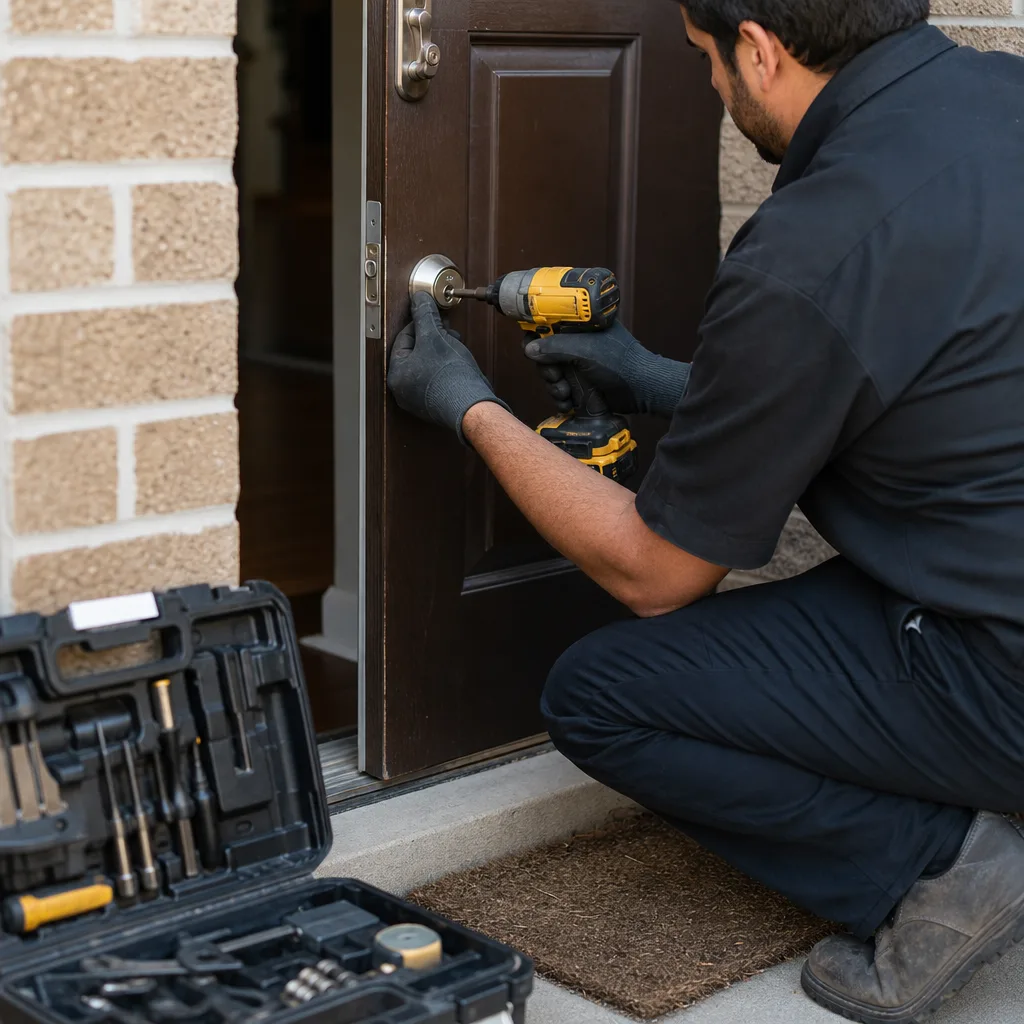
Call a verified locksmith when you are locked out, when your lock is malfunctioning, when you have lost keys and cannot account for who has copies, or when you need to rekey after a move, roommate change, or contractor completion. Explore more guides & resources on protecting your Chicago home or business. In Chicago’s older housing stock, particularly in neighborhoods like Logan Square and Bridgeport with original 1920s door hardware, a professional assessment prevents damage to irreplaceable vintage fixtures.
Call before you are in crisis. A routine rekey of a standard Kwikset or Schlage deadbolt, quoted in advance, typically runs $25 to $45 per cylinder in Chicago, with a service call of $75 to $125 depending on neighborhood and timing. Emergency lockout service, when quoted honestly, ranges from $95 to $175 for standard residential entry during business hours. Knowing these ranges lets you recognize fraud when the quote is $19 or $600.
Novak Lock & Security Chicago offers free estimates in Chicago. Call (331) 202-1318. Every estimate is firm, written, and binding under Haven Standard Clause 1.
Frequently Asked Questions
A legitimate residential locksmith in Chicago charges $75 to $125 for a standard service call, $25 to $45 per cylinder for rekeying, and $95 to $175 for emergency lockout service during business hours. Prices vary by neighborhood distance, time of day, and lock grade, but any quote under $30 for dispatch or over $400 for basic residential service warrants scrutiny. Call (331) 202-1318 for a firm written quote before any work begins.
At Novak Lock & Security Chicago, yes. Haven Standard Clause 1 prohibits our technicians from changing the quoted price at the door. The dispatcher quotes a firm price for the described work, and that price appears on the invoice. If the scope changes because you request additional services, we quote the new total in writing before proceeding. No exceptions since 2002.
Ask for the Chicago locksmith license number and verify it through the Department of Business Affairs and Consumer Protection online portal. Legitimate operations provide this without hesitation. The license should match the business name on the vehicle and invoice. Unlicensed operation is a misdemeanor in Chicago; working with an unlicensed locksmith voids your recourse if fraud occurs.
Drilling is necessary when a high-security cylinder, such as Medeco or Mul-T-Lock, has no available key and no code card for key generation, or when internal mechanism failure, often from corrosion in Chicago’s humid lakefront climate, prevents any form of non-destructive entry. For standard residential Kwikset or Schlage deadbolts in normal condition, drilling is almost never necessary and should be viewed as a revenue tactic unless specifically justified with visible evidence.
State clearly that you are calling the Chicago Police Department, then do so. In Illinois, a service provider who refuses to leave a residence after being told to depart is trespassing. If they have damaged your property or made threats, this becomes a criminal matter. Document everything while ensuring your personal safety. Do not physically confront the individual.
Yes. Novak Lock & Security Chicago provides free second opinions on any written estimate from any competitor. Bring the written quote to our office or describe it by phone. We will review the scope, pricing, and necessity of recommended work at no charge. This service exists because post-fraud customers need verified guidance, and because transparent pricing should be the industry standard, not a differentiator.
The Bottom Line
Locksmith fraud in Chicago is not sophisticated. It is a five-step playbook with visible warning signs at every stage: the impossible price, the vague phone response, the unmarked vehicle, the instant drilling claim, and the revised price at the door. Each sign is detectable. Each gives you the opportunity to decline service before money changes hands. The protections are simple: demand a firm written price before dispatch, verify the vehicle and identification on arrival, question any drilling recommendation for standard hardware, and know your right to stop work and call law enforcement if the terms change mid-job. At Novak Lock & Security Chicago, we have operated under the same rule since 2002: the price quoted is the price paid, documented in writing, with a photo record of every visit. It is not innovative. It is what the trade should require of itself.
Written by Daniel Novak, Owner at Novak Lock & Security Chicago, serving Chicago since 2002.